Thirteen years after Rana Plaza collapse, campaigners call for strengthening of vital safety agreement
Friday 24 April, marks thirteen years since the collapse of the Rana Plaza building, which housed five garment factories, in Bangladesh. At least 1138 people died and over two thousand people were injured in this entirely preventable incident. Today, the global Clean Clothes Campaign network reaffirms its solidarity with all those affected by this horrific tragedy and urges major brands to draw their lessons from this tragedy and ensure that all their workers are kept safe.
On the occasion of the Rana Plaza anniversary Clean Clothes Campaign urges:
companies like Decathlon, Ikea, Wranger and Mayoral to keep garment workers safe by signing the binding fire and safety agreement (Accord) that was created in the wake of this tragedy;
companies that already signed the Accord to (a) expand its coverage to more workers, (b) include climate-related health risks in its mandate, and (c) ensure that there is no employer interference in any part of the Accord’s operations;
Hugo Boss and LPP to renew their commitment to keep Pakistani workers safe.
the government of Bangladesh to implement Labour Reform Commission recommendations.
Actions holding brands accountable
Clean Clothes Campaign (CCC) member organisations in multiple countries, including Belgium, Spain, Bangladesh, Poland and the UK will take action this week to call on major apparel companies such as Decathlon, Ikea, Wrangler and Mayoral to come back on their refusal to sign this vital safety programme. Actions also target Hugo Boss and Polish retailer LPP (Reserved, Mohito, House, Cropp and Sinsay) who earlier this year refused to renew their commitment to the safety programme in Pakistan. As publicly available inspection reports demonstrate, life-threatening risks have been identified inside Hugo Boss and LPP's Pakistan suppliers, but both brands refuse to prevent, mitigate and remedy them through this trusted and proven programme.
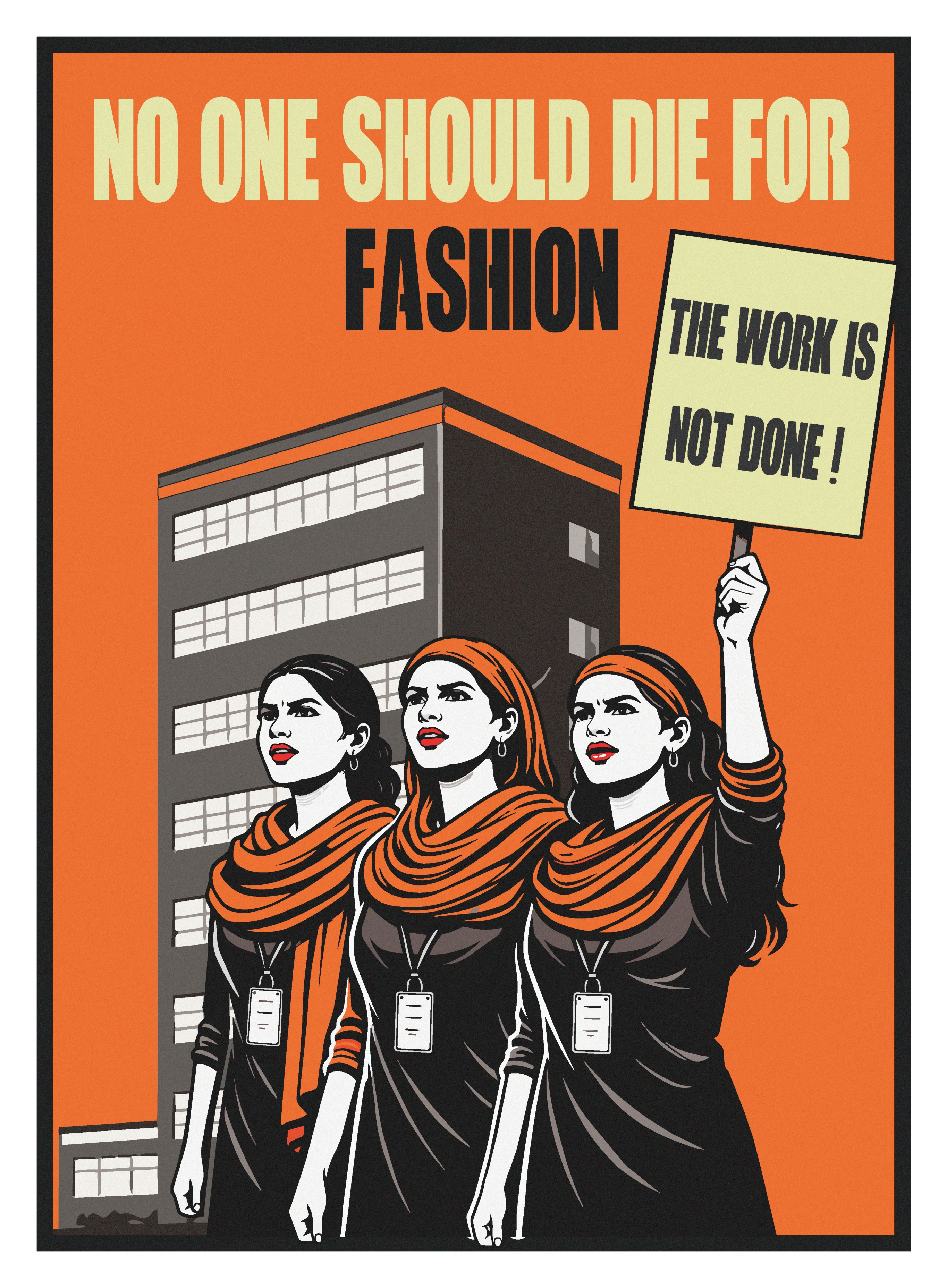
The binding agreement, called the International Accord for Health and Safety in the Textile and Garment Industry agreement, is signed by over 290 brands and presently covers over 1700 factories. The programme was initiated in Bangladesh after the Rana Plaza collapse and expanded to Pakistan in 2023. While it has brought huge improvements to worker safety, the work is not done. As it stands, 46% of the factories in Bangladesh are yet to complete the necessary remedation of their fire alarm and detection systems, and 27% of the factories still need to complete remediations that make sure that all workers can safely exit the factory in case of an emergency. Safety also is a continuous process and needs ongoing monitoring by trained and independent inspectors to detect dangerous practices. Furthermore, as the International Accord’s Bangladesh programme is up for renewal at the end of this year, this is a crucial moment to ensure it covers as many workers as possible.
Broader coverage will save more lives
The Accord’s Bangladesh country programme is currently limited to the production locations where the final stage of garment production takes place. This means that workers involved in fabric production, or those toiling in washing and dyeing and spinning mills, as well as home textiles and accessories workers are not yet protected.[1] The fact that these workers are still at risk is evidenced by the continued occurrence of fire and boiler explosions in such facilities since the formation of the Accord.
Recent research conducted by Campagna Abiti Puliti (the Italian CCC) and the Bangladesh Center for Worker Solidarity (BCWS) about so called ‘green factories’ also highlights the need for the Accord to ensure explicit inclusion of heat and other climate related health and safety hazards into the Accord's inspections and mandated remediation. “I've witnessed the direct impact of heat stress on young women workers and what it does to their bodies and their health. Every day they have to work without sufficient breaks or even drinking water”, says Kalpona Akter from BCWS. Protecting workers against heat stress is also a key safety issue highlighted in the CCC’s manifesto about a just transition in the garment industry, which will be officially launched next week.
Moreover, it remains vital that Accord signatory brands work to ensure that there is no employer interference in any part of the Accord’s operations – from the inspections to trainings and the complaints mechanism, as flagged in last year’s memo published by CCC and other witness signatories. "For the continuation of the Bangladesh agreement it is vital that workers and their organisations can file complaints about all issues safely in the knowledge that decisions will be made independently," according to Rashadul Alum Raju, General Secretary of Bangladesh Independent Garment Union Federation BIGUF.
“All 290 brands and retailers that signed the Accord together with the signatory unions have a say in how the programme is run, they should push for this successful programme to protect even more workers by expanding its scope to other facilities handling their garments and to protect their workers from heat stress, as well as ensure the Accord operations are free from employer interference” says Ineke Zeldenrust from the CCC International Office.
Actions in Bangladesh
On 24 April, CCC's Bangladeshi trade union partners will commemorate those who were killed or injured in the collapse, and support increased compensation specifically for pain and suffering for the injured workers and families of those who died. They also call upon the newly elected government of Bangladesh to implement the recommendation of the Labour Reform Commission that was initiated after a student uprising overthrew the Hasina government, emphasising those related to wages, organising and the right to collective bargaining, and for fair labour courts and justice system.
[1] The only exception are units which are on the same premises as a factory for the last stages of garment production (Cut-Make-Trim) , as well as home textiles and accessories facilities that have been voluntarily listed by signatories.