
“Statements must go further” - CCC response to brand statements on the Bangladesh minimum wage negotiations
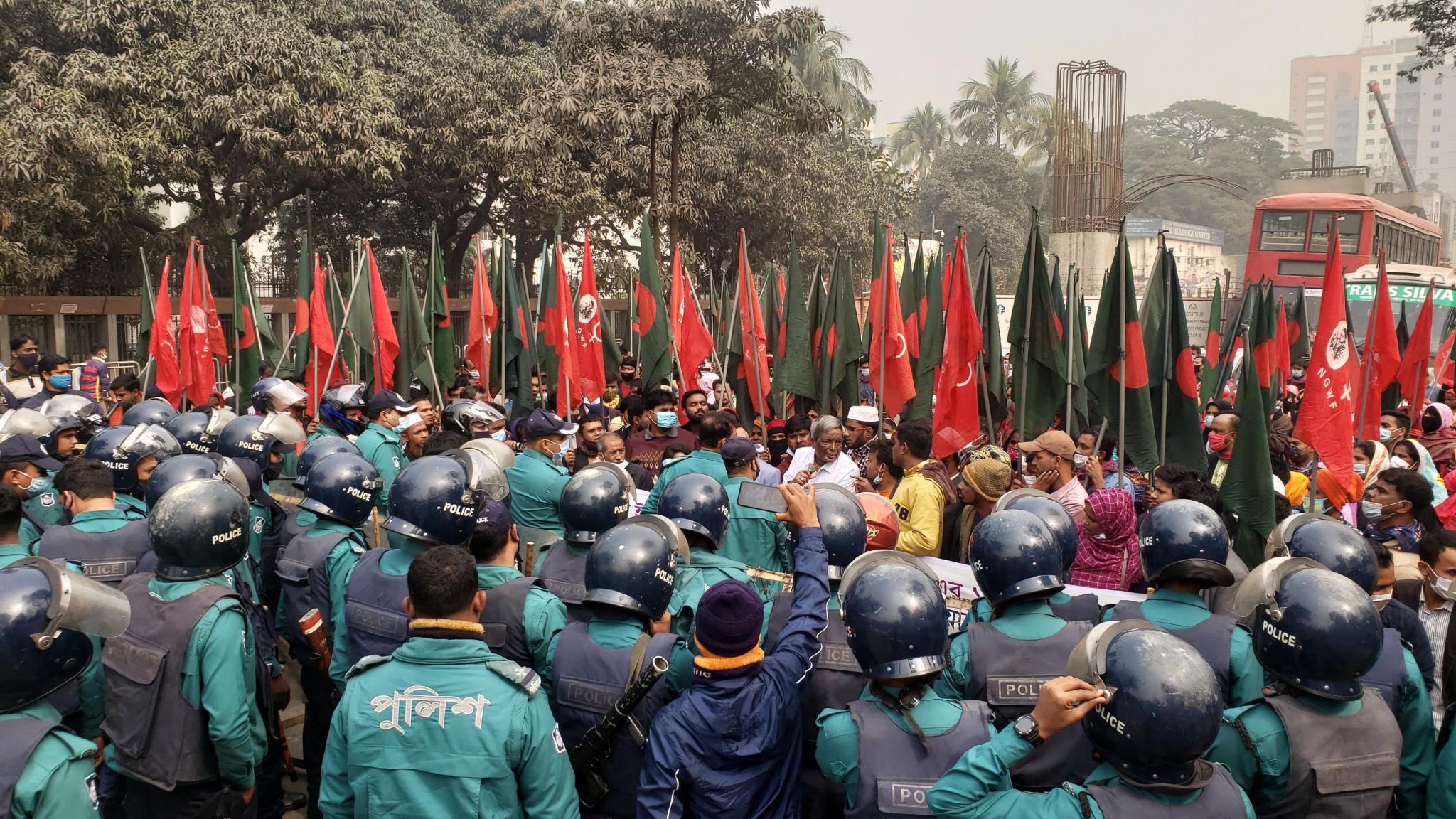
Wage protests in Bangladesh in 2023
As vital negotiations around the Bangladesh RMG sector minimum wage continue, the responses from brands, multi-stakeholder initiatives (MSIs) and industry bodies have varied widely in content and effectiveness. Here is where they stand.
Industry bodies and MSIs
AAFA: The American Apparel and Footwear Association letter to the Government of Bangladesh, copied to BGMEA and BKMEA, is strong on supporting a fair process, principle of a fair wage and condemns any violence against workers. The letter says members are committed to responsible purchasing practices that support new labour costs, yet it stops short of naming any figure or backing the worker demand.
Fair Wear Foundation: FWF has noted the workers’ demand for Tk32,000 and expressed support for a living wage. However, their statement does not commit members to support this stance, engage with suppliers on this, or pledge to absorb higher labour costs in their purchasing practices.
ACT: The ACT statement supports higher wages in principle, but does not name a figure or back the Tk32,000 demand. It also lacks a commitment from members to follow up with suppliers.
FLA: Likewise, the Fair Labour Association issued a statement stating their support for an increase to a living wage level, backed by evidence. Yet the statement fails to mention purchasing practices commitments from their corporate members to act.
A joint statement by 8 organisations (amfori, Ethical Trading Initiative, Etisk Handel Danmark, Etisk handel Norge, Etisk Handel Sverige, Fair Wear Foundation, Green Button, Mondiaal FNV) Also notes the 32,000 Tk demand, but fails to add if and how member brands will support this demand in practice.
The statements as they stand share in common that they do not explicitly say how member brands will ensure their purchasing prices will support the implementation of a 32,000 Tk minimum wage. Statements must go further. Without the vital commitment of MSIs and industry bodies to mobilise their members behind a formal position, with a figure, and publicly state this, the statements risk bringing good intention rather than building a strong tool to support wage increase.
What brands must do now
Statements by industry bodies and MSIs are a starting point, but they only matter if brands act on them individually and bilaterally with their suppliers. To support any of the statements put out to date, the main action that is now needed is for brands to follow up with their suppliers bi-laterally, to give their individual support to higher wages and the Tk32,000 figure, and state their intention to build increased labour costs into any prices paid and purchasing practices going forward.
Individual brands
As brands are the direct business partner, their direct statements are the most important to note. Some brands have gone further. Italian outdoor company Oberalp has stated that it supports a wage increase to Tk32,000 and has committed to reflect it in its pricing. Varner Group has come out publicly to say it will ensure higher labour costs are reflected in its purchasing practices.
Many key brands, however, have stayed silent or relied on statements from the MSIs they belong to, without stating their own support or committing to change their purchasing practices. These include H&M, Inditex, New Yorker, Bestseller, M&S, NEXT, Primark, Kontoor, C&A and LPP.