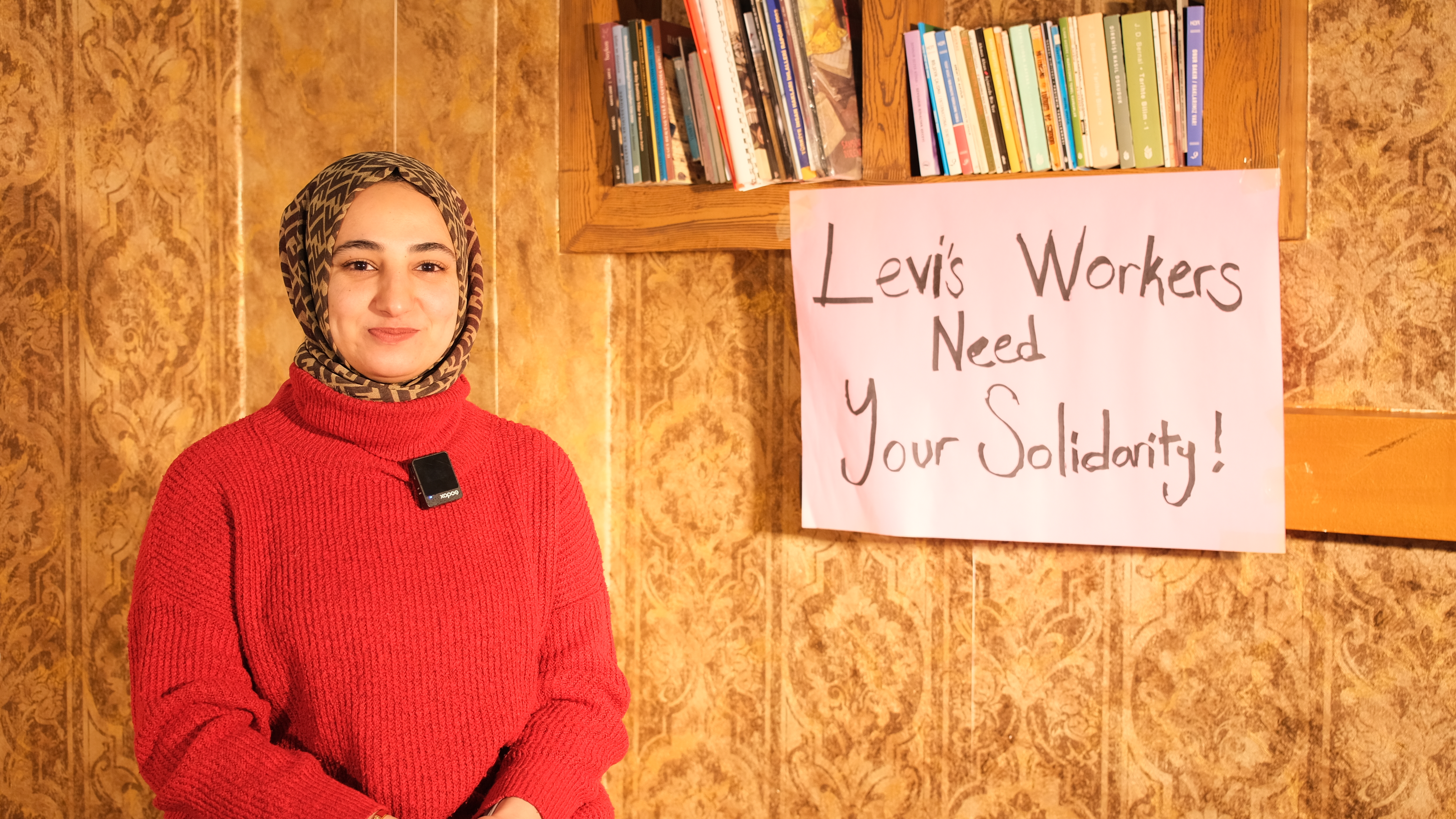
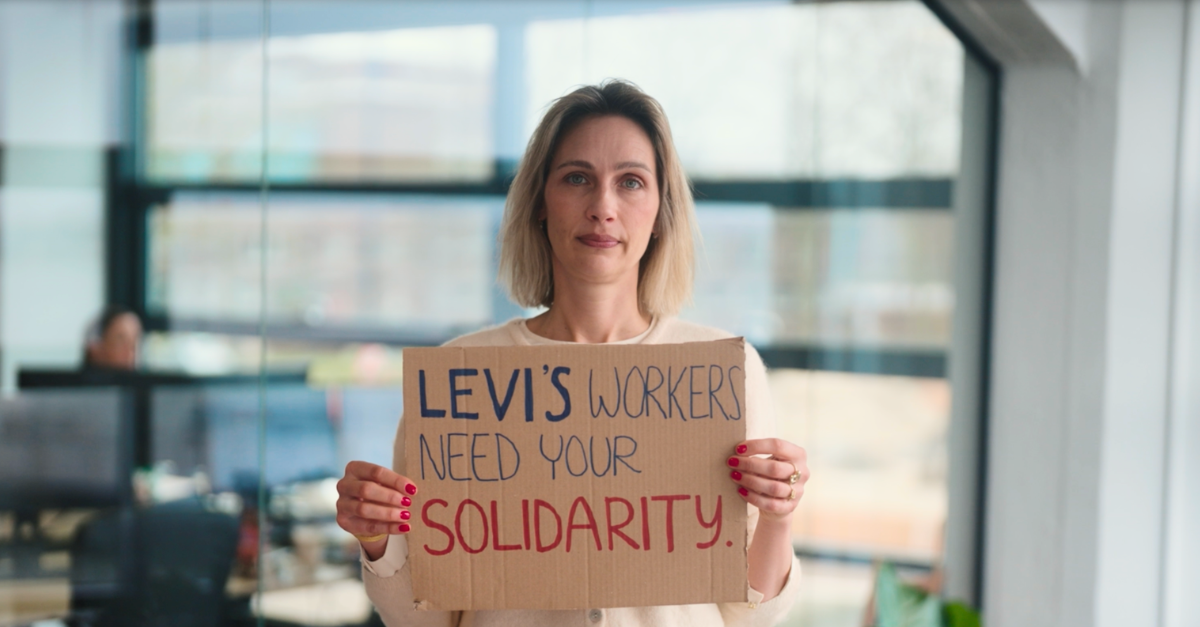
Solidarity with Levi's workers Workers in Türkiye producing jeans for Levi Strauss were punished for their participation in a new trade union and peaceful protests demanding better pay and working conditions. Provincial security forces tear-gassed, beat, pepper-sprayed and detained these workers. In retaliation, the factory management fired all 400 protesters. Levi's, being the only buyer in the factory, has a lot of influence over what happens to the workers. Levi's initially acknowledged that the events violated their code of conduct, but never followed through on requests made by workers and their representatives for reinstatement or compensation for the fired workers.
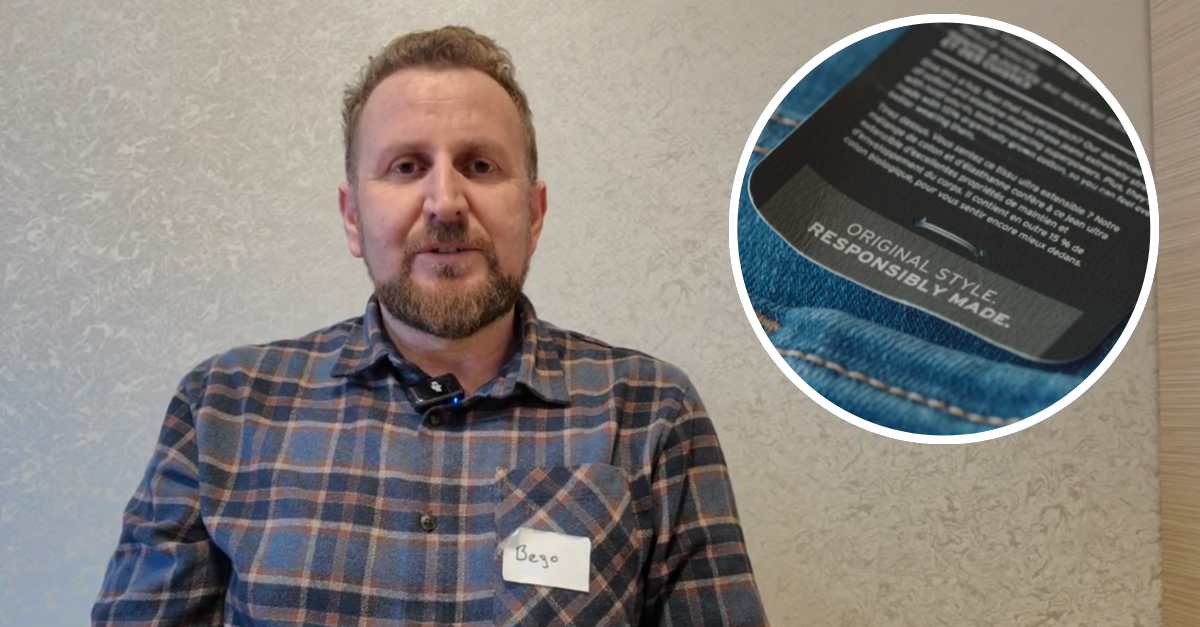
Meanwhile, Levi's presented a very different picture in its communication towards consumers: its jeans carried labels claiming that they were made "responsibly" and on its website, the brand prided itself on having "always stood up for what's right".
Clean Clothes Campaign believes brands like Levi's should not be able to make such promises without consequences. Together with a group of individual Levi's consumers, our Netherlands-based foundation has launched a court case against Levi's on 14 April 2026 for its misleading advertisements towards Dutch consumers.
This case shows the need for a transformation to a fairer and more sustainable production system that centres workers' rights. In our forthcoming Manifesto 'Fashioning a Just Transition', we advocate for a ban on greenwashing and social washing, as well as for the freedom of workers to organise in independent trade unions. When we achieve this together, cases such as this one will be prevented in the future.
Frequently asked questions:
What happened at Levi's supplier factory in Türkiye?
Following the devastating earthquake in south-eastern Türkiye in February 2023, the region was severely affected, with 50,000 people losing their lives. In Şanlıurfa, home to the Özak factory, which manufactures for Levi’s, working conditions deteriorated significantly because management failed to take into account the personal circumstances of workers in the wake of the earthquake.
Workers faced:
extremely long working days
insufficient leave
poor working conditions and food
no serious response to complaints regarding leave or pay rises
In November 2023, the conflict escalated. A large proportion of the workers joined an independent trade union, BİRTEK-SEN, out of dissatisfaction with the situation. One of the workers, a young female activist involved with the BİRTEK-SEN trade union (Unified Textile, Weaving and Leather Workers Union), was dismissed.
This was followed by strikes involving hundreds of workers. During these strikes – which were peaceful on the workers’ part – they were sprayed with tear and pepper gas, beaten and detained.
The factory’s response? Mass redundancies. More than 400 workers lost their jobs — a move seen as retaliation for trade union activity and strikes.
What can Levi's do about this?
Levi’s is the sole customer of this factory and therefore wields considerable influence. According to the UN Guiding Principles and OECD guidelines, Levi’s must address and remedy violations in the supply chain – particularly as the dominant customer of the supplier factory.
The brand:
- acknowledged that there were serious problems
- stated that this was a breach of their own code of conduct (supplier code)
- promised to take action
But, in reality:
- no effective solution was found for the dismissed workers
- Levi’s continued to manufacture at the same factory and even placed more orders
- no structural improvements were enforced
By doing nothing despite having the power to act, Levi’s bears responsibility for perpetuating the situation.
Why did CCC start this case?
The Clean Clothes Campaign is launching a legal case in the Netherlands alongside four consumers (plaintiffs) on the basis of consumer law.
Levi’s sells jeans with the message that the company:
- produces responsibly
- respects labour rights
- respects labour rights- and prevents abuses in the supply chain
- and prevents abuses in the supply chain
However, under European rules and the Authority for Consumers and Markets’ Guidelines on Sustainability Claims, companies are not allowed to create an impression that they are more sustainable or fairer than is actually the case.
Our demands are therefore:
- acknowledgement that these statements were misleading
- a halt to similar claims in the future
- a public retraction
- and compensation for dismissed workers
Levi’s should not simply brush this aside by merely changing the text on its website. We believe that the only real remedy lies in providing redress to the workers and making a real commitment to a sustainable improvement in working conditions in the factories that produce for Levi’s.
What are the misleading claims that Levi's made?
Previously, the brand claimed that workers throughout the supply chain were protected and that it takes action beyond merely safeguarding labour rights in the workplace. In the Netherlands, Levi's jeans were labelled as “responsibly made”.
Levi’s continues to emphasise its core values and states that it selects suppliers based on social and environmental standards. According to its own guidelines, the company also operates a “zero tolerance” policy: in the event of serious violations of labour rights, it intervenes immediately and terminates its partnership with factories.
 Donate now